


PayPal Product Manager Interview Guide: Process, Tips & Sample Questions (2026)


Introduction
Every PayPal product, from Checkout to Venmo transfers, depends on product managers who can simplify complex payment flows and build trust for millions of users. Landing a product manager role at PayPal is competitive, especially as demand for skilled product leaders in fintech continues to rise. The global digital payments market is expected to grow at a compound annual growth rate of more than 15 percent through 2030, increasing the need for product managers who can improve checkout performance, reduce fraud, and shape financial experiences trusted by millions.
With top tech and fintech companies often accepting fewer than 10 to 12 percent of applicants, candidates need to enter PayPal’s interview process with strong product intuition, analytical depth, and clear communication. This guide walks you through everything you need to succeed in the PayPal product manager interview. You will learn how the interview process works, the types of PM interview questions to expect, how to prepare for product sense and strategy rounds, and what PayPal values most in a product candidate. By the end, you will have a clear and practical game plan to walk into each round with confidence.
PayPal Product Manager Interview Process
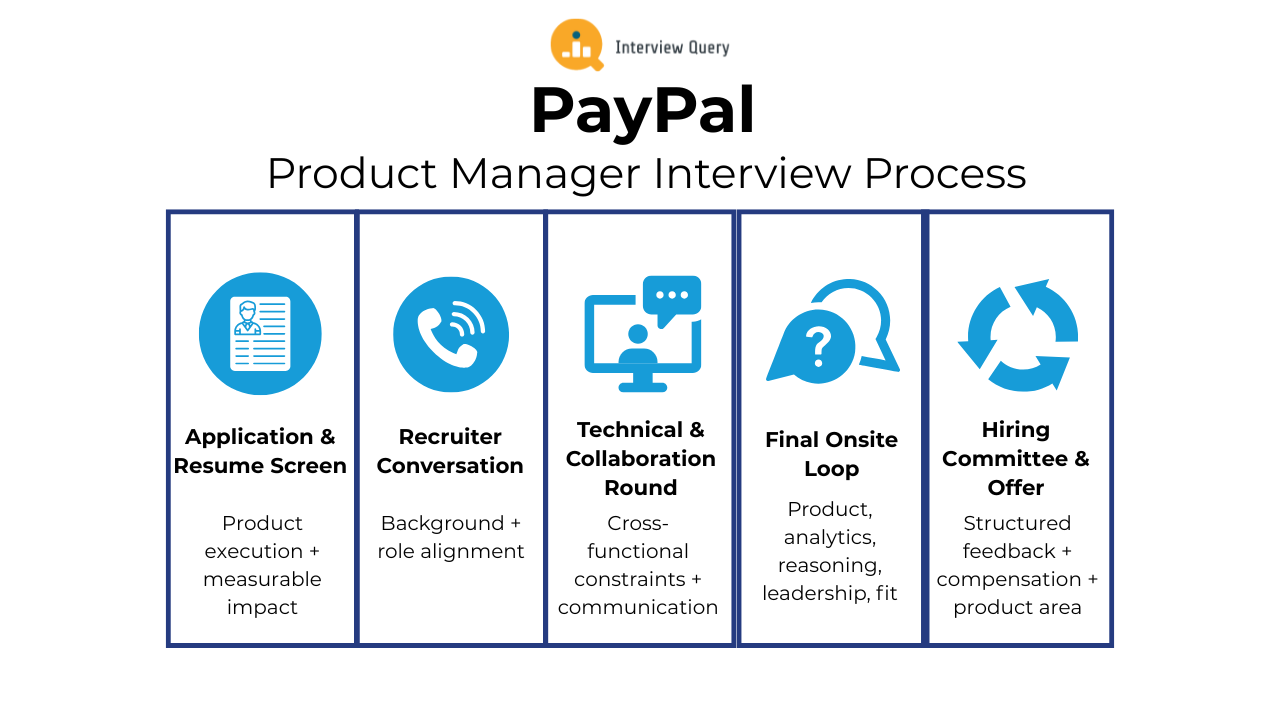
The PayPal product manager interview process evaluates your ability to design trusted financial experiences, guide cross functional teams, and make data driven decisions in a global payments ecosystem. The stages focus on product sense, analytical depth, technical collaboration, and behavioral alignment with PayPal’s values. Most candidates complete the full loop within three to six weeks, depending on team availability, role level, and scope. Below is a breakdown of each stage and what PayPal interviewers assess.
Application And Resume Screen
During the initial review, PayPal recruiters look for strong product execution and measurable impact. They prioritize candidates who have led user facing initiatives, improved funnels, launched features, or collaborated closely with engineering and analytics teams. Experience in fintech, marketplace platforms, payments, or fraud related domains is especially valuable because of the company’s risk and compliance-heavy environment.
Tip: Use specific metrics tied to conversion, retention, or operational efficiency. Clear evidence of impact increases your chances of advancing.
Initial Recruiter Conversation
The recruiter call introduces your background and validates alignment with PayPal’s product roles. Expect questions about your experience in product discovery, prioritization, experimentation, stakeholder coordination, and data based decision making. Recruiters also confirm team preferences, timelines, and compensation expectations. This conversation is non technical but establishes whether you move forward.
Tip: Prepare a concise story that connects your past work to PayPal’s mission of building secure and frictionless digital payment experiences.
Technical And Cross Functional Collaboration Interview
This stage evaluates how you work with engineering, data science, design, risk, and compliance teams. You may discuss how APIs work within a payment flow, how risk engines influence user decisions, or how you clarify tradeoffs when backend limitations affect product direction. The goal is to assess your ability to reason about technical constraints and communicate effectively with partners.
Tip: Show curiosity about architecture, data flows, and system limitations because PayPal expects product managers to understand how decisions affect both risk and user experience.
Final Onsite Interview
The final onsite loop consists of multiple interviews, each focused on a key competency required for building and scaling PayPal’s products. These sessions provide a holistic view of your judgment, analytical skills, leadership approach, and ability to navigate complex financial environments.
Product Sense and Customer Understanding: You will analyze user needs, identify friction points, and design solutions for areas such as checkout, onboarding, merchant tools, or dispute workflows. Interviewers assess clarity of problem framing, structured reasoning, and how well your ideas balance ease of use with trust and safety.
Tip: Incorporate global payment differences, fraud considerations, and compliance constraints into your reasoning since these influences shape nearly every PayPal product.
Analytics and Execution: This session examines how you interpret data, diagnose funnel issues, and guide product decisions. Expect to define KPIs, evaluate experiments, or investigate scenarios such as approval rate drops or merchant activation challenges.
Tip: Reference metrics such as funding mix, decline codes, TPV, and conversion to demonstrate familiarity with payments data.
System Reasoning and Technical Judgment: You may be asked to walk through how a payment request flows through PayPal, how risk scoring affects approval, or how you manage technical debt during feature development. Interviewers evaluate how well you integrate system understanding into product strategy.
Tip: Clarify assumptions early and show how you validate engineering constraints during roadmap planning.
Cross Functional Leadership and Alignment: This round focuses on how you influence without authority, handle competing priorities, and collaborate across engineering, design, analytics, risk, and operations.
Tip: Provide examples where you brought multiple teams together to make a decision that required tradeoffs.
Behavioral and Team Fit: Interviewers explore your approach to ownership, conflict resolution, feedback, and decision making under uncertainty. They want evidence that you uphold trust and maintain clear communication in high pressure situations.
Tip: Use STAR stories that highlight how you navigated constraints or ambiguity while delivering results.
Hiring Committee And Offer
After the onsite loop, each interviewer submits structured feedback covering your product sense, analytical depth, technical collaboration, and ability to balance user experience with risk and regulatory constraints. The hiring committee then reviews your full profile, assessing whether your decision making aligns with PayPal’s standards for building trusted, global payment experiences. If approved, PayPal finalizes your level, compensation band, and potential product area such as checkout, merchant onboarding, identity, or risk. Your recruiter then walks you through the offer, timeline, and next steps.
Tip: Share your preferred product domains early, since PayPal often evaluates fit across multiple teams during committee review.
Need 1:1 guidance on your interview strategy? Explore Interview Query’s Coaching Program that pairs you with mentors to refine your prep and build confidence.
PayPal Product Manager Interview Questions
The PayPal product manager interview covers product sense, analytics, execution, system reasoning, and leadership. These questions evaluate how well you understand customer pain points, design frictionless payment experiences, reason through data, and communicate tradeoffs. Interviewers want to see how you think through real-world PayPal challenges, such as improving approval rates, refining merchant onboarding, reducing fraud, or scaling global checkout flows. The goal is to assess structured decision making, clarity of thought, and your ability to align product solutions with the needs of both consumers and merchants.
Product Sense And Feature Design Interview Questions
In this stage, PayPal focuses on your ability to define user problems, analyze friction points, and design practical, scalable solutions. Product sense interviews often involve global payments, identity, merchant acceptance, mobile experience, or checkout optimization. You will be expected to evaluate tradeoffs between risk, usability, and technical constraints while framing ideas clearly.
How would you improve PayPal’s checkout conversion for cross border customers?
Cross border flows expose PayPal to unique friction such as currency mismatch, regulatory steps, issuer risk checks, and local payment preferences. A strong answer examines the funnel by region, identifies where drop off peaks, and prioritizes solutions like local payment options, clearer currency handling, reduced optional fields, or adaptive authentication. Tie each change to measurable conversion gains while respecting compliance and risk thresholds.
Tip: Mention validating ideas with A/B tests across markets, since PayPal relies heavily on controlled experimentation for global checkout decisions.
-
Understanding lifetime value helps PayPal evaluate sustainability, forecast revenue for merchant tools, and decide which customer segments to prioritize. The solution is to multiply monthly revenue per user by the average customer lifespan or use the common approximation LTV = ARPU / churn rate. Strong responses explain how LTV affects roadmap decisions, pricing adjustments, and investment in retention features.
Tip: Mention that PayPal often segments LTV by merchant size, region, and payment method to guide product strategy more accurately.
-
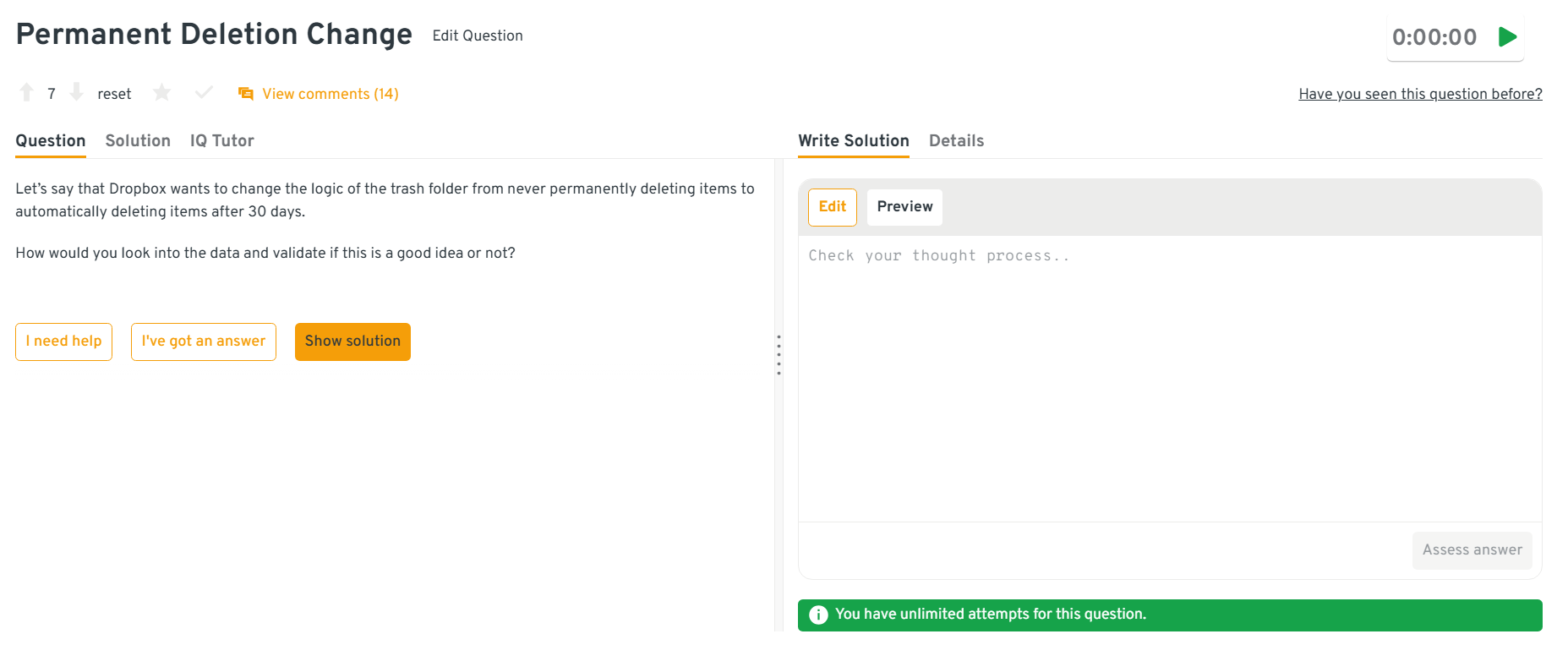
This type of question tests whether you can assess user impact, behavioral patterns, and unintended consequences, which directly parallels decisions PayPal makes around risk holds, refunds, and dispute flows. A strong approach includes examining recovery frequency, user complaints, support tickets, storage costs, and differences across segments while running controlled experiments. The goal is to quantify benefit versus disruption before rolling out any irreversible change.
Tip: Explain how you would monitor long tail edge cases, since PayPal products often involve sensitive actions users may need to reverse.
Head to the Interview Query dashboard to practice the full set of PayPal product manager interview questions. With structured product prompts, analytics cases, and AI-guided tips, it is one of the best ways to sharpen your product sense and execution skills for PayPal interviews.
How would you improve the PayPal mobile app experience for first time users?
Improving early app experience matters because activation strongly correlates with repeat use, funding source attachment, and long term value. Start by mapping the first session, identifying points of confusion, and removing unnecessary steps. Clarify value immediately, streamline sign in or verification, and tailor onboarding to whether a user wants to send, receive, or shop. Propose changes that balance usability with security obligations.
Tip: Note that PayPal heavily monitors early churn and uses behavioral segmentation, so your solution should include clear success metrics tied to activation and engagement.
-
This evaluates your ability to untangle correlation from causation, a core skill when PayPal PMs assess features that influence trust, privacy, and friction. The solution involves comparing sentiment, engagement, and churn between adopters and non adopters, running targeted surveys, and ideally conducting an experiment to isolate the feature’s effect. Pair quantitative signals with qualitative insights to understand why users feel uneasy.
Tip: Emphasize strong privacy framing because PayPal closely scrutinizes features that influence user trust and regulatory compliance.
Watch Next: Meta Product Manager | Improving Search Feature | MAANG Interview Prep
In this mock product exercise, Zarrar, a senior data scientist, conducts an interview walk-through that discusses how to improve Facebook’s search experience for users looking for activities in San Francisco, breaking down ambiguous product challenges. You’ll learn how to identify the right KPIs, evaluate search quality, reason through user intent, and propose measurable improvements that matter. If you are preparing for a product manager role, this session gives you a repeatable structure for defining metrics, prioritizing opportunities, and communicating product decisions with clarity.
Analytical And Execution Interview Questions
This section evaluates your ability to interpret metrics, diagnose problems, and guide strategic decisions using data. PayPal expects product managers to identify performance drivers such as conversion drops, declines by region, merchant churn, or user activation issues. Clear analysis and actionable recommendations matter more than complex modeling.
-
A drop in credit card transaction amounts can signal changes in user behavior, issuer restrictions, funding mix shifts, or merchant pricing. A strong approach segments the trend by region, merchant type, device, issuer, and risk decision path. Look for recent product changes, promotions, declines, or routing adjustments that might push users to alternative funding sources. Pair quantitative analysis with merchant feedback to pinpoint whether this is behavioral or system driven.
Tip: PayPal values early detection of issuer or risk model changes, so mention monitoring decline codes and approval patterns alongside spend.
Define KPIs for a new PayPal checkout experience and explain why each metric matters.
Start by capturing top of funnel signals like checkout initiation and step completion. Then include authorization success rate, funding mix distribution, decline reasons, and end to end conversion. Add risk and trust guardrails such as dispute rate and fraudulent approval rate to ensure quality. These KPIs matter because they reflect user intent, merchant revenue impact, and PayPal’s need to balance seamless payments with financial safety.
Tip: Prioritize no more than six metrics and explain how each ties to merchant outcomes, platform reliability, or user trust.
-
This scenario tests whether you can separate engagement quality from channel effectiveness. Start by segmenting WAU growth to understand who is driving the increase and whether they typically engage with email. Examine recent changes to notification content, send timing, spam filtering, and mobile preferences. Compare engagement across channels to see whether users shifted to push notifications or in-app prompts instead of email.
Tip: Connect your analysis to PayPal’s emphasis on trust by noting how irrelevant or excessive emails can hurt long term user sentiment.
-
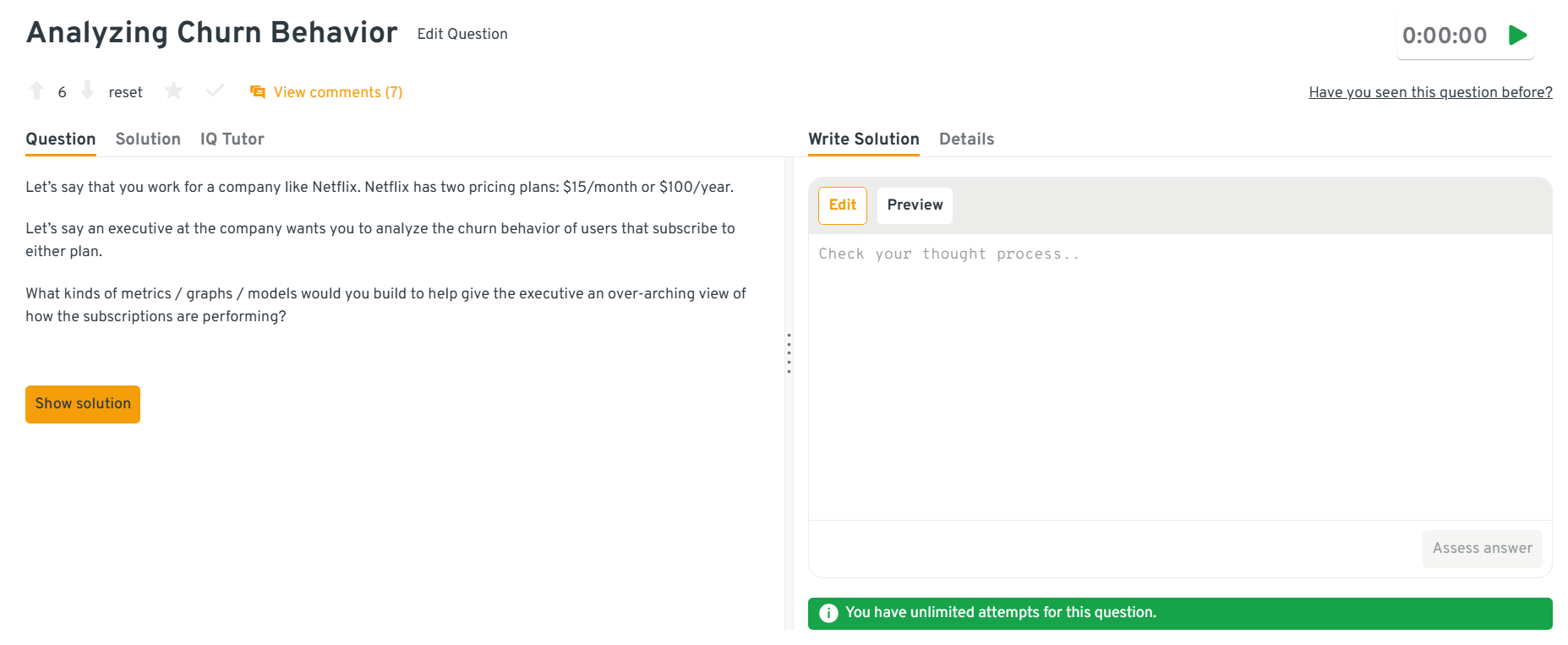
For PayPal, understanding subscription churn mirrors how merchants manage recurring billing health. A good approach segments churn by plan type, tenure, payment method, region, and price changes. Use cohort curves, survival analysis, and retention visualizations to highlight when churn spikes. Then compare monthly versus annual patterns to identify cancellation triggers or renewal risks. This structure helps guide interventions that improve long term value.
Tip: Mention examining payment failures and expired cards, since involuntary churn is a major driver in payment platforms.
Head to the Interview Query dashboard to practice the full set of PayPal product manager interview questions. With structured product prompts, analytics cases, and AI-guided tips, it is one of the best ways to sharpen your product sense and execution skills for PayPal interviews.
How would you design an experiment to test a simplified checkout flow?
Describe a controlled A/B test comparing the existing flow with a streamlined version. Define primary metrics such as conversion, approval rate, and time to completion, and include guardrails like fraud rate, dispute rate, and authorization latency. Ensure adequate sample sizing, segment results by device and region, and monitor for payment method or issuer specific shifts. A good answer shows you can balance growth with risk and reliability.
Tip: Highlight PayPal’s emphasis on incremental rollouts, noting that risky flows should launch with staged traffic ramps to protect merchants.
Want to sharpen your take-home skills before your PayPal PM interview? Use Interview Query’s Takehome tool to practice structuring product cases, validating assumptions, and presenting clear, decision-ready solutions just like in a real PM assignment.
System Reasoning And Technical Judgment Interview Questions
This portion of the process assesses how comfortably you work with engineering constraints, APIs, backend flows, and risk systems. PayPal does not require deep coding knowledge but expects PMs to reason through real system interactions that affect product decisions.
Explain how a payment request flows through PayPal from checkout click to final authorization.
A high level explanation should cover the client request leaving the merchant, PayPal validating credentials, performing risk checks, routing the request to the issuer, receiving the authorization decision, and returning the final status to the merchant. This matters because PayPal PMs must understand where latency, declines, and risk friction occur so they can prioritize improvements. Mention how each handoff influences user trust and conversion.
Tip: Highlight where logging, monitoring, and fallback routing help maintain payment reliability during outages.
-
Although PMs do not write production SQL, PayPal expects comfort interpreting queries used to understand cross platform behavior. The approach involves grouping events by user, identifying distinct platforms visited, and classifying users into mobile only, web only, or both before computing percentages. Understanding this logic helps PMs evaluate device specific friction and guide feature prioritization across surfaces.
Tip: Note that PayPal often segments platform behavior because checkout and authentication performance differ significantly between mobile and web.
-
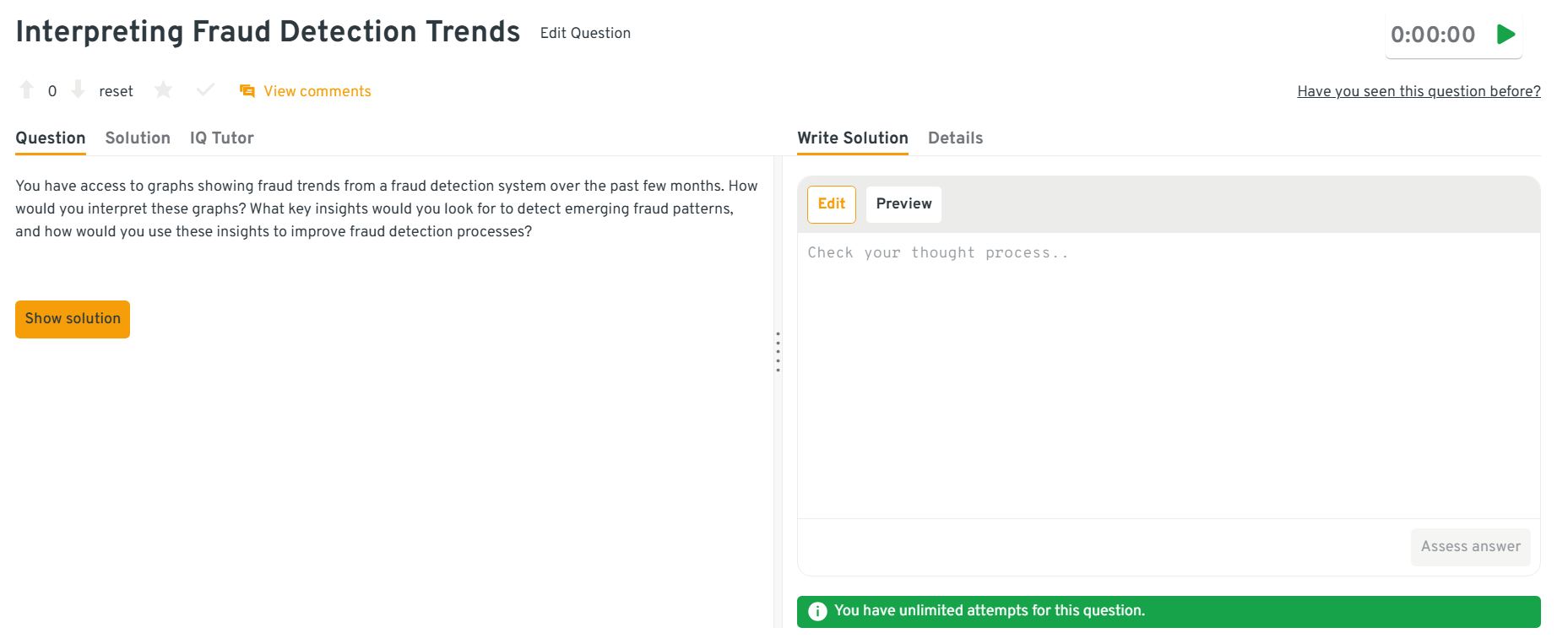
Start by reviewing trends across segments like payment method, device, geography, and merchant category to isolate anomalies. Look for spikes in chargebacks, suspicious velocity, or new user patterns that correlate with increased risk. Tie findings to root causes such as compromised cards, bot traffic, or merchant abuse. These insights help propose product or risk model adjustments that protect revenue and trust.
Tip: Emphasize collaboration with risk engineering because PayPal relies on joint investigations to validate whether patterns are model related or behavioral.
Head to the Interview Query dashboard to practice the full set of PayPal product manager interview questions. With structured product prompts, analytics cases, and AI-guided tips, it is one of the best ways to sharpen your product sense and execution skills for PayPal interviews.
How would you prioritize technical debt on a legacy checkout service?
A structured answer weighs reliability issues, maintenance cost, developer velocity, and alignment with long term architecture. Categorize debt into high risk items that affect payment success, medium term scalability constraints, and low impact code hygiene. Partner with engineering to size effort, assess customer impact, and create a roadmap that balances new features with platform stability.
Tip: Mention using a transparent prioritization model since PayPal values clear justification when negotiating roadmap space with cross functional teams.
Want to build up your PayPal interview skills? Practice real hands-on problems on the Interview Query Dashboard and start getting interview-ready today.
Behavioral And Leadership Interview Questions
This section evaluates your communication style, leadership approach, and ability to navigate ambiguity. PayPal looks for PMs who collaborate well, influence without authority, and maintain trust in high stakes financial environments.
What makes you a good fit for our company?
This question checks whether you understand PayPal’s mission, its emphasis on trust and safety, and the role PMs play in shaping secure global payments. Strong answers connect your product instincts, data driven thinking, and cross functional leadership to PayPal’s scale and regulatory environment.
Example: “I thrive in complex ecosystems where reliability and user trust matter. In my last role, I simplified a high friction verification flow that raised completion rates by 14 percent. I enjoy solving trust centered problems, which aligns closely with PayPal’s product priorities.”
Tip: Reference both customer value and compliance or risk awareness.
Share a time you made a high risk product decision with incomplete information.
Interviewers want to see structured evaluation, clear assumptions, and the ability to balance growth with risk. PayPal PMs often make decisions before having perfect data due to regulatory timelines or global rollout constraints.
Example: “When a key metric dropped midlaunch, I paused the rollout for a subset of users, gathered quick directional data, and validated an integration bug before full deployment. This reduced potential churn while keeping timelines intact.”
Tip: Show that you protect customer trust while moving decisively.
Describe a time you had to work with a difficult stakeholder.
This tests communication, empathy, and alignment skills, all essential for PayPal PMs who work with engineering, risk, compliance, and merchant teams. The best responses show how you stabilized tension and guided the conversation back to shared outcomes.
Example: “A compliance partner rejected a proposed flow. I reframed the discussion around user intent, mapped each regulatory constraint, and co created a revised design that met policy without adding friction.”
Tip: Emphasize how your communication improved collaboration, not just the final result.
What are your three biggest strengths and weaknesses you have identified in yourself?
PayPal looks for PMs who self reflect and grow in high stakes environments. Choose strengths tied to product judgment, analytical rigor, and influencing ability, and weaknesses that you actively work to improve without undermining your credibility.
Example: “I excel at simplifying complex decisions and aligning teams. A weakness I track is over involvement during execution, so I now set clearer ownership boundaries.”
Tip: Keep weaknesses real but framed around ongoing improvement.
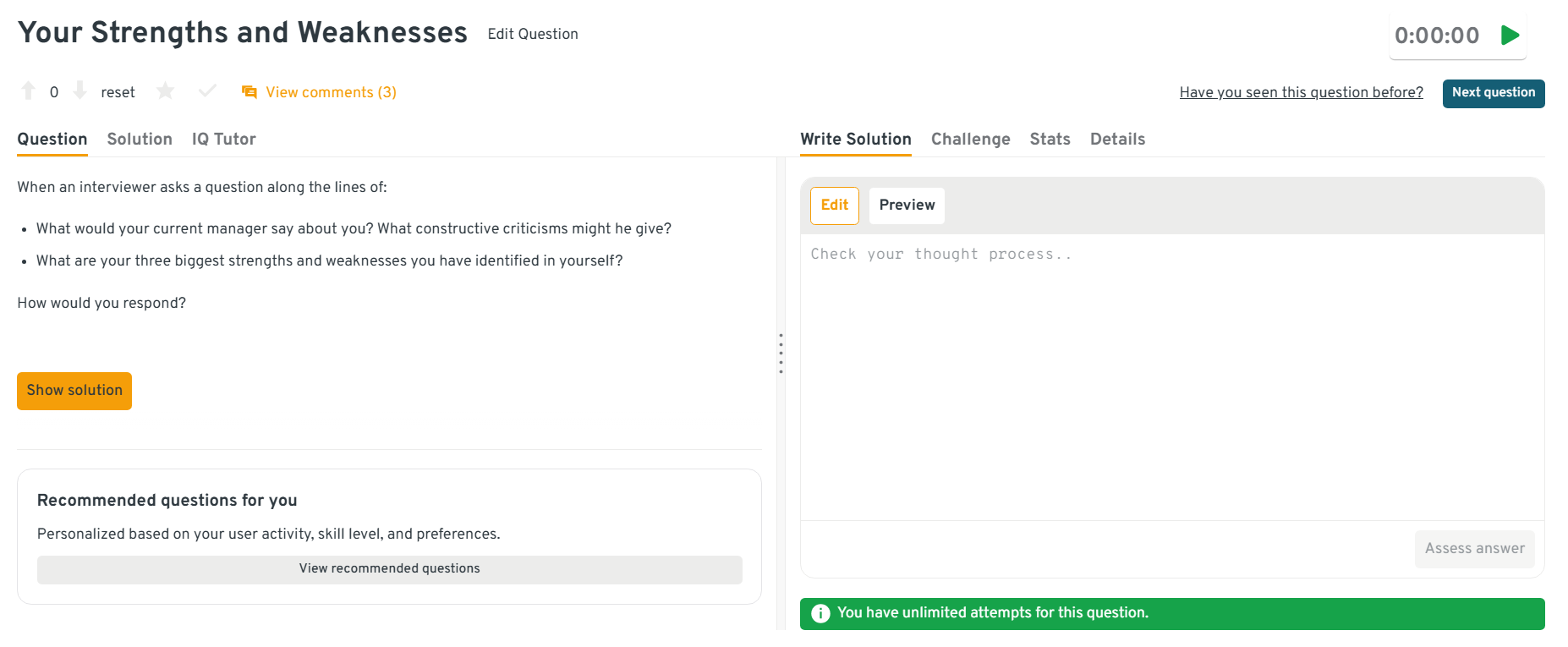
Head to the Interview Query dashboard to practice the full set of PayPal product manager interview questions. With structured product prompts, analytics cases, and AI-guided tips, it is one of the best ways to sharpen your product sense and execution skills for PayPal interviews.
Describe how you handle ambiguity when requirements change frequently.
Ambiguity is common at PayPal due to shifting regulations, issuer dependencies, and risk model updates. Strong answers highlight structured thinking, rapid prioritization, and transparent communication with partners.
Example: “During a regulatory update, I created a simple decision matrix and aligned engineering and compliance on a phased rollout that maintained deadlines without sacrificing safety.”
Tip: Emphasize how you bring clarity to teams through concise, proactive communication.
Want realistic product interview practice without scheduling or pressure? Try Interview Query’s AI Interviewer to simulate PayPal style product sense, analytics, prioritization, and execution questions and get instant, targeted feedback.
What Does a PayPal Product Manager Do
A product manager at PayPal operates at the intersection of customer needs, technical systems, and global financial regulations. Whether improving merchant conversion, strengthening fraud defenses, or enhancing the PayPal and Venmo app experience, PMs influence how millions of users move money every day.
Although responsibilities vary by team, core expectations include:
- Understanding the needs of consumers, merchants, partners, and developers and turning them into clear product goals and requirements.
- Using experimentation results, transaction data, and internal dashboards to analyze performance, define success metrics, and identify improvement opportunities.
- Prioritizing backlogs and making tradeoffs that balance user experience, reliability, technical complexity, and compliance obligations.
- Partnering closely with engineering, design, analytics, legal, compliance, and risk to deliver features safely and efficiently from discovery through launch.
- Communicating insights, strategy, timelines, and decisions clearly to leadership and cross functional teams to maintain alignment across execution.
How to Prepare for the PayPal PM Interview
PayPal’s interviews are designed to understand how you think, how you structure problems, and how you make decisions in a payments ecosystem filled with risk, regulation, and high scale. Preparing effectively means aligning your practice with how PayPal evaluates PMs: clarity of reasoning, awareness of user needs, comfort with data, and the ability to work cross functionally with engineering, design, and risk partners.
Here is how to prepare with PayPal’s expectations in mind.
Understand PayPal’s Product Ecosystem and Business Model: Before you practice product questions, learn how PayPal actually works. Study the checkout flow, merchant tools, Venmo, Braintree, and PayPal Wallet. Understand the revenue model, risk processes, and compliance constraints that shape product decisions.
Tip: Read PayPal’s shareholder letters, product announcement blogs, and earnings transcripts to learn how leadership talks about trust, conversion rate, and merchant value.
Build Comfort with Data, Metrics, and Experimentation: Most product decisions at PayPal depend on metrics like authorization rate, conversion rate, fraud loss, and user engagement. Strengthen your ability to segment data, interpret patterns, and choose metrics that matter. Practice explaining how you would measure success and set guardrails.
Tip: As you work through analytics questions, tie every metric back to a user or business outcome. PayPal values PMs who understand the why behind the numbers.
Develop a Clear Approach to Technical Reasoning: You don’t need to code, but you do need to understand how payments move through networks, how APIs interact, and how reliability issues affect users. Learn the basics of authorization, settlement, latency, and error handling so that you can communicate effectively with engineering.
Tip: In technical discussions, show that you can ask the right clarifying questions and identify dependencies early.
Practice Structured Thinking for Strategy and Case Studies: PayPal will ask you to evaluate long term product decisions for merchants or consumers. Use frameworks to structure your thinking: define the goal, identify drivers, evaluate tradeoffs, and propose a path forward. Keep solutions grounded in user value and business impact.
Tip: Avoid over indexing on frameworks. Interviewers want natural, logical thinking, not memorized templates.
Prepare Behavioral Stories That Demonstrate Ownership and Collaboration: Behavioral interviews focus on how you lead teams and navigate ambiguity. Prepare stories that show you driving alignment, resolving conflicts, handling setbacks, and delivering impact under constraints.
Tip: End each story with what you learned and how you improved your process. Reflection is a strong signal of maturity for PayPal’s PM roles.
Run Mock Interviews to Build Pace and Confidence: PayPal’s interviews combine product reasoning, strategy, data, and communication in a single conversation. Practicing under realistic mock interviews can help you pace your answers, explain your reasoning calmly, and stay structured even when challenged.
Tip: Practice thinking aloud. PayPal cares deeply about how you arrive at decisions, not just the final answer.
Looking for hands-on problem-solving? Test your skills with real-world challenges from top companies. Ideal for sharpening your thinking before interviews and showcasing your problem solving ability.
Salary And Compensation For PayPal Product Managers
PayPal’s compensation structure is designed to reward product managers who drive measurable impact across its global payments ecosystem. Product managers typically receive competitive base salaries, annual performance bonuses, and meaningful equity grants tied to long term company performance. Total compensation varies based on level, location, and the scope of the product area you support. Mid level and senior product managers make up the majority of new hires, especially for teams focused on checkout, merchant tools, trust and safety, or platform experiences.
Read more: Product Manager Salary
Tip: Clarify your target level with your recruiter early, since leveling influences both your compensation range and the expectations for your role.
PayPal Product Manager Compensation Overview (2025)
| Level | Role Title | Total Compensation (USD) | Base Salary | Bonus | Equity (RSUs) | Signing / Relocation |
|---|---|---|---|---|---|---|
| PM1 | Associate or Junior Product Manager | $130K – $170K | $105K–$130K | Performance based | Standard RSU grants | Limited availability |
| PM2 | Product Manager/Mid Level | $165K – $215K | $130K–$150K | Performance based | RSUs included | Offered case by case |
| Senior PM | Senior Product Manager | $210K – $275K | $150K–$175K | Above target possible | Larger RSU allocations | More common for senior hires |
| Staff PM | Staff or Lead Product Manager | $270K – $350K+ | $170K–$190K | High performer bonuses | High RSUs with refreshers | Frequently offered for experienced PMs |
Note: These estimates are based on 2025-2026 data from Levels.fyi, Glassdoor, TeamBlind, public job listings, and Interview Query’s internal salary database.
Tip: Compare compensation ranges across multiple sources and request location specific bands since PayPal salaries vary significantly across San Jose, Austin, New York, and remote roles.
Average Base Salary
Average Total Compensation
Negotiation Tips That Work For PayPal
Negotiating effectively requires a clear understanding of market benchmarks and transparent communication with your recruiter. PayPal appreciates candidates who use data, stay professional, and explain how their past accomplishments translate into future impact.
- Confirm your level early: PayPal’s leveling structure heavily affects base salary, bonus potential, and equity size. Ensure you know whether you are being considered for PM2, Senior PM, or Staff PM before setting expectations.
- Use current market data during discussions: Anchor compensation expectations using verified sources like Levels.fyi, Glassdoor, and the Interview Query salary database. If you have competing offers, share them professionally and frame your value through measurable impact.
- Account for geographic differences: Compensation varies across PayPal’s hubs, with the Bay Area offering the highest stock ranges. Always request region specific bands to evaluate offers accurately.
Tip: Ask your recruiter for a complete compensation breakdown, including base salary, bonus targets, equity vesting schedules, and any signing incentives, so you can negotiate with full clarity.
FAQs
How long does the PayPal product manager interview process take?
Most candidates complete the PayPal product manager interview process within three to six weeks. The exact timeline depends on team availability, role level, and whether additional cross functional interviews are required. Recruiters typically provide updates after each stage and flag if more conversations are needed for final alignment.
Does PayPal require payments experience for product manager roles?
Not always. Payments, risk, or compliance experience is helpful, but PayPal primarily looks for strong product fundamentals, analytical reasoning, and clear communication. Candidates who show structured thinking, customer empathy, and the ability to learn complex systems quickly can succeed without a fintech background.
How technical is the PayPal product manager interview?
The interview tests practical technical fluency rather than deep engineering knowledge. You should understand how APIs work, how backend limitations shape product decisions, and how risk or compliance constraints influence the user journey. The focus is on reasoning, tradeoffs, and clarity, not coding.
Does PayPal ask case studies or take home assignments?
Some teams include a short case exercise, especially for roles involving merchant tools, onboarding, or risk related flows. These cases evaluate how you break down problems, organize solutions, and communicate assumptions. Most mid level and senior candidates move directly to interviews without a take home component.
What qualities does PayPal look for in product managers?
PayPal values structured decision making, customer centered thinking, and the ability to collaborate with engineering, data science, risk, design, and legal partners. Interviewers look for clarity, ownership, and a balanced approach to growth, trust, and regulatory requirements.
How can I stand out during the interview?
Tie your examples to measurable outcomes and show that you understand the tension between frictionless experiences and financial safety. Demonstrate clear prioritization, communicate your assumptions openly, and use simple frameworks that reveal your thought process. Candidates who stay calm, organized, and customer focused tend to stand out.
Become a PayPal Product Manager with Interview Query
Preparing for the PayPal product manager interview requires strong product intuition, clear analytical thinking, and the ability to communicate confidently in a complex payments environment. By mastering PayPal’s interview structure, practicing real world product scenarios, and refining how you explain tradeoffs and decisions, you can move through each stage with purpose. Strengthen your preparation with the full Interview Query question bank, sharpen your delivery using the AI Interviewer, or partner with mentors through Interview Query’s Coaching Program to build the confidence and structure you need to stand out as a future PayPal product manager.